4 days
from $1,300
Essential Mauritania: Iron Ore Train
Nouakchott, Atar, the Terjit oasis and a night aboard the world's longest iron ore train.
View itinerary
Everything to know before you ride one of the world's longest trains across the Sahara — the route, the boarding point at Choum, safety and how to book it as part of a guided Mauritania tour.
Few experiences define a Mauritania tour like a night aboard the iron ore train. Officially the Mauritania Railway, it hauls ore roughly 700 kilometres from mines near Zouérat, deep in the Sahara, to the export port of Nouadhibou on the Atlantic — and when fully loaded it is one of the longest and heaviest trains on the planet. Most travellers join it at Choum, a desert junction reached by road from Atar and the Terjit oasis, and ride through the night to the coast.
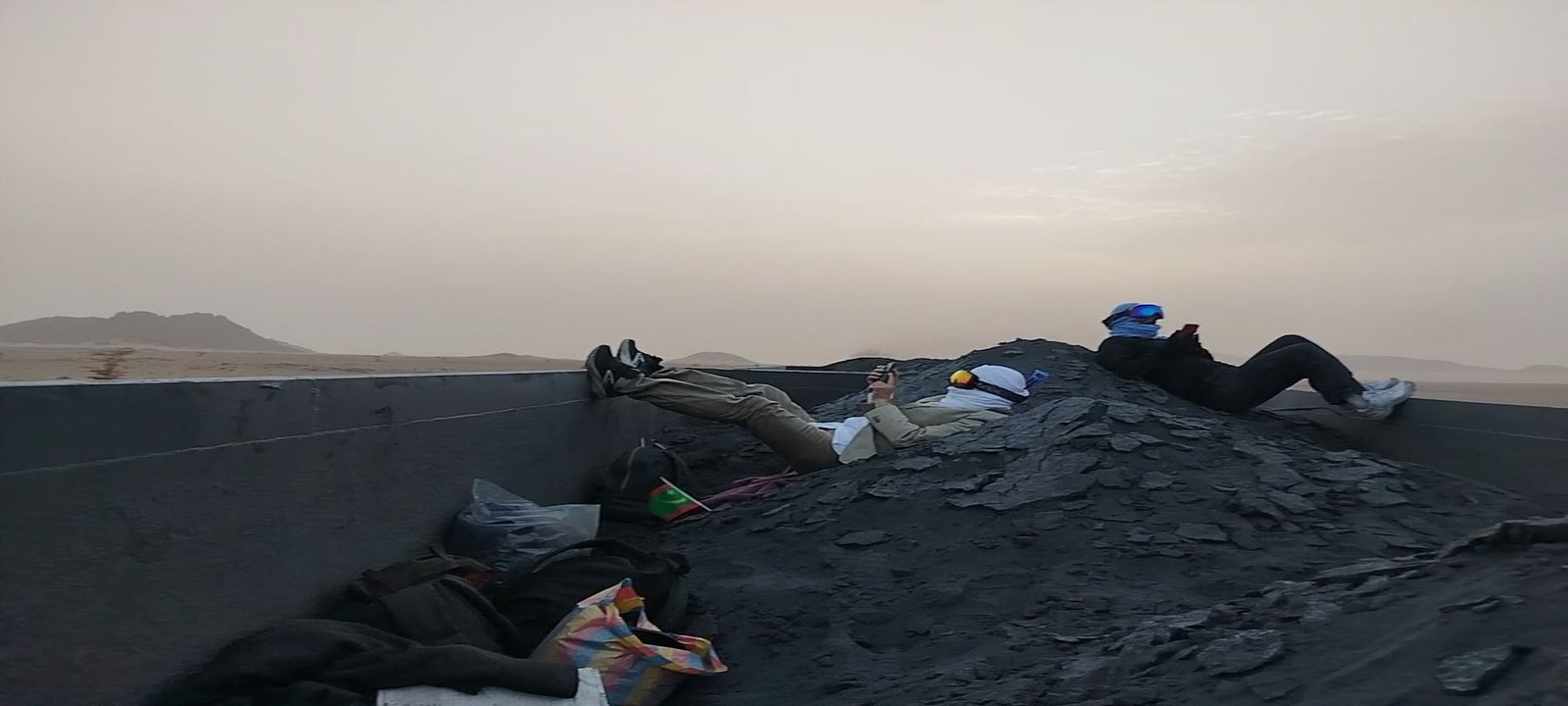
Two ways to ride. The classic one is on top of the iron ore in an open wagon: no seats, no shelter, thick dust, freezing wind after dark — and a night under the stars that people remember for the rest of their lives. The alternative is the single passenger carriage that is sometimes attached to the train. It has seats and walls, but it is basic, crowded, and cannot be counted on in advance.
On our departures we plan for the ore wagon, brief you on clothing and kit, and take the passenger carriage instead if it is running and you prefer it.
Choum is the practical choice for travellers coming from Atar, the Terjit oasis or Chinguetti, and it is where our tours board. Riding from Nouadhibou heads inland towards the mines, usually in empty wagons — a different trip, and one some travellers combine with a return. Zouérat, at the mining end, is possible but far from the rest of the Adrar.
The train appears out of the dark, often hours later than anyone predicted, and stops for a short time. You climb the ladder on the side of a wagon, settle on the ore, and wait. Then the whole length of it jolts into motion and the Sahara starts sliding past: dunes, stars, the occasional fire beside the line.
It is cold, it is dusty, and nobody sleeps much. It is also the reason most of our guests come to Mauritania in the first place — and why we build the rest of the itinerary, from the Terjit oasis to Nouadhibou, around it.
Yes, but rules for independent travellers have tightened in recent years, and police at Choum sometimes turn away tourists who arrive on their own. Travelling with a licensed local operator who arranges the boarding, as on our iron ore train tours, is the most reliable way to ride.
The iron ore train — also called the desert train or the Mauritania Railway — hauls iron ore about 704 kilometres from the mines near Zouérat to the port of Nouadhibou. Loaded, it is one of the longest and heaviest trains in the world, often 2 to 3 kilometres long.
A typical crossing takes 12 to 16 hours depending on where you board. Most of our guests join at Choum, roughly two-thirds of the way along the line, for an overnight ride that reaches Nouadhibou around dawn.
Riding independently in an open ore wagon is a real Sahara adventure and not risk-free: it is cold at night, very dusty, and the train makes no announcements. On our departures you travel with a guide who has made the crossing many times, handles boarding at Choum and briefs you on what to bring.
The line runs between the mines around Zouérat in northern Mauritania and the export terminal at Nouadhibou on the Atlantic. Most travellers join partway, at Choum, which is reachable by road from Atar and the Terjit oasis.
Riding on the ore itself is traditionally free or nearly free, and the passenger carriage, when it runs, costs only a few euros. The real cost is getting to Choum and back from Nouadhibou safely — which is what a guided tour covers.
Warm layers (the Sahara is cold at night), a headscarf or buff against the dust, a headlamp, water, and a sleeping bag or mat if you ride in an open ore wagon. We send a full packing list on booking.
Every Sahara Iron Trail tour that includes Choum and the Terjit oasis includes the iron ore train as a booked, guided experience — see our Essential Mauritania tour or the longer version with the Banc d'Arguin National Park. Message us on WhatsApp for dates.
Browse all four tours, or get in touch and we'll help you choose.
Nouakchott, Atar, the Terjit oasis and a night aboard the world's longest iron ore train.
View itinerary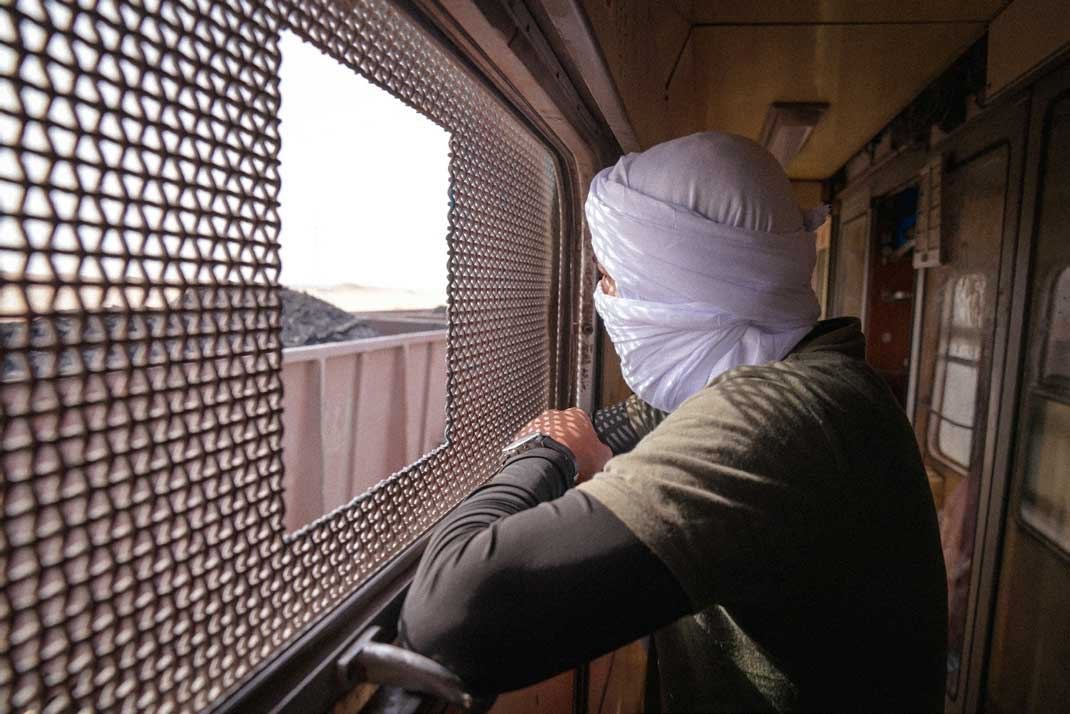
The full iron ore train expedition, extended with two days in the Banc d'Arguin National Park.
View itineraryTailor-made trips
Every itinerary here can be changed: your own dates, a private departure for your family or friends, more days in the desert, or extras like the Eye of the Sahara and Ouadane. Tell us what you want to see and we will design it.
Sahara Iron Trail
Usually replies within an hour
Salam! 👋 Planning a Mauritania tour or the iron ore train? Message us — we're happy to help.
Chat on WhatsApp Call +222 27 44 50 52